
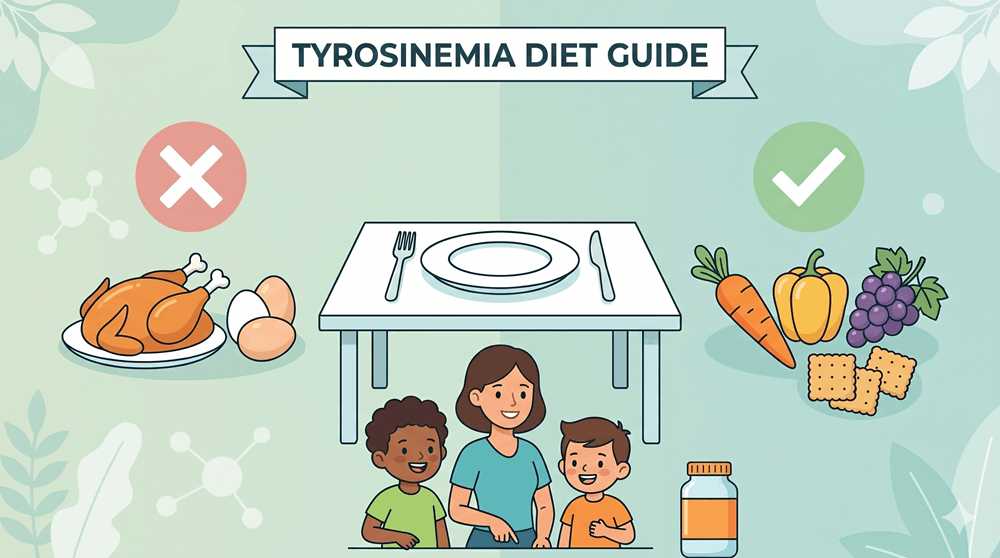
Managing Tyrosinemia in children requires more than just medical treatment; it demands a carefully controlled diet that supports growth while preventing harmful buildup of tyrosine in the body. For parents and caregivers, understanding what to feed (and what to avoid) can feel overwhelming at first. This guide simplifies everything you need to know about a Tyrosinemia-friendly diet, including food restrictions, nutrition tips, and practical meal planning strategies.
What Is Tyrosinemia and Why Does Diet Matter
Tyrosinemia is a rare genetic disorder in which the body cannot properly break down the amino acid tyrosine. As a result, toxic substances can build up, potentially damaging the liver, kidneys, and nervous system.
Diet plays a critical role in managing this condition. Since tyrosine comes from protein, children with Tyrosinemia must follow a low-protein, low-tyrosine diet to stay healthy and prevent complications.
Foods To Avoid in Tyrosinemia
Children with Tyrosinemia need to avoid foods that are high in protein and tyrosine. These include:
High-Protein Foods
- Meat (chicken, beef, lamb)
- Fish and seafood
- Eggs
- Dairy products (milk, cheese, yogurt)
- Nuts and seeds
- Lentils, beans, and legumes
Processed & Hidden Protein Foods
- Packaged snacks with added protein
- Protein shakes or supplements
- Bakery items made with milk or eggs
Certain Grains and Cereals
- Regular wheat products (in large quantities)
- High-protein cereals
Even small amounts of these foods can increase tyrosine levels, so strict monitoring is essential.
Foods That Are Generally Safe
While restrictions are necessary, there are still many safe and enjoyable food options for children:
Low-Protein Foods
- Most fruits (apples, bananas, berries, mangoes)
- Many vegetables (potatoes, carrots, cucumbers, spinach in moderation)
- Special low-protein rice, pasta, and bread (medical-grade products)
Fats & Sugars (in moderation)
- Vegetable oils
- Butter substitutes
- Sugar, honey, and jams
These foods help provide energy without increasing tyrosine levels.
Important Nutrition Tips for Children
Maintaining proper nutrition is just as important as restricting harmful foods. Here’s how to ensure your child stays healthy:
1. Use Medical Formula
Children with Tyrosinemia are often prescribed a special amino acid formula that provides essential nutrients without tyrosine. This is a key part of their daily diet.
2. Monitor Protein Intake Strictly
Even safe foods can contain small amounts of protein. Work with a dietitian to calculate daily protein limits.
3. Ensure Adequate Calories
Low-protein diets can sometimes lack calories. Include enough carbohydrates and fats to support growth and energy.
4. Regular Blood Tests
Routine monitoring of tyrosine levels helps adjust the diet as your child grows.
5. Work With a Specialist
A metabolic dietitian can create a personalized plan tailored to your child’s age, weight, and condition.
Meal Planning Tips for Busy Parents
Planning meals ahead can make life much easier. Here’s how to simplify the process:
Plan Weekly Menus
Create a weekly meal schedule to avoid last-minute confusion and ensure dietary compliance.
Stock Low-Protein Essentials
Keep your kitchen stocked with:
- Low-protein pasta and rice
- Approved snacks
- Fruits and vegetables
Prepare Meals in Advance
Batch cooking can save time. Prepare low-protein meals and store them for quick use during the week.
School Meal Planning
Pack safe, child-friendly meals like:
- Fruit bowls
- Low-protein sandwiches
- Homemade snacks
Make Meals Fun
Children are more likely to follow their diet if meals are colorful, creative, and appealing.
Sample Daily Meal Plan
Here’s a simple example to guide you:
Breakfast:
Low-protein bread with jam + fruit juice
Mid-Morning Snack:
Apple slices or banana
Lunch:
Low-protein pasta with vegetable sauce
Evening Snack:
Homemade low-protein cookies
Dinner:
Vegetable stir-fry with low-protein rice
Before Bed:
Prescribed medical formula
Challenges Parents May Face
Managing a Tyrosinemia diet can come with challenges such as:
- Limited food choices
- Social situations (parties, school events)
- Picky eating habits
However, with planning, support, and education, these challenges can be effectively managed.
Final Thoughts
A well-managed diet is the cornerstone of living well with Tyrosinemia. While the restrictions may seem strict, they are essential for protecting your child’s health and ensuring normal growth and development. With the right guidance from Nota Cares, tools, and support, parents can confidently provide safe, nutritious, and enjoyable meals for their children.
Frequently Asked Questions on Tyrosinemia
1. Can children with Tyrosinemia eat normal food?
No, they must follow a restricted low-protein diet. However, many modified and safe alternatives are available.
2. Why is protein restricted in Tyrosinemia?
Protein contains tyrosine, which the body cannot properly process in this condition, leading to harmful buildup.
3. Is breast milk allowed for infants with Tyrosinemia?
In some cases, limited amounts may be allowed under strict medical supervision, along with a special formula.
4. How often should tyrosine levels be checked?
Typically, regular blood tests are required; your doctor will determine the exact schedule.
5. Can children with Tyrosinemia live a normal life?
Yes, with proper diet, medication, and monitoring, children can lead healthy and active lives.